Cyclical Formations
By Lauren Berling and Sarah Diaz
Walking into the Institute of Fine Art’s James B. Duke House to see 1246 Days Around the Sun , viewers encounter four large-scale sculptures suspended in the Beaux-Arts interior of the Marica Vilcek Great Hall. These are the centerpiece of the exhibition by Kampala-based artist Acaye Kerunen, whose work comprises plant fibers from the wetland ecosystems of Nalubaale (Lake Victoria) and the Great Lakes region across East and Central Africa. In pointed dialogue with the built environment of the Duke House, Kerunen’s exhibition highlights collaborative processes of making, the threatened ecology of the Great Lakes region, and material knowledge transmitted over generations. Based out of her studio in Kampala, the urban capital of Uganda, Kerunen works with a transnational network of collaborators across rural areas of East and Central Africa to source both the raw materials and woven components from which she assembles her sculptures. The works’ large scale, soft fibers, and abstract forms command attention in contrast to the marble interior of the Great Hall and its grand staircase. Upon closer inspection, their complex structures emphasize the ingenuity of weaving, sewing, braiding, knotting, and coiling—techniques of making long overlooked in their historical association with “craft” and “women’s work,” but which can also be understood as sophisticated acts of engineering and mathematics.
Kerunen’s authoritative sculptures showcase the diverse properties and applications of regional plant materials, including obuso (raffia), byayi (banana fiber), mutuba (the bark of which yields olubugo , also known as barkcloth) and ensansa (palm leaves). Growing in wetland regions across Central and East Africa, the musale tree, which produces obuso , is integrated into the daily lives of individuals in surrounding communities, particularly in the construction of buildings, baskets, and mats. [ 1 ] By using obuso for its formal qualities—detached from its conventional uses—Kerunen asks viewers to reevaluate a material that may be seen as mundane or purely functional. Pok Lengu (Husks of Beauty) and Tong Lengu (Eggs of Beauty) , both 2024, bookend the installation in the Great Hall, echoing one another in their use of obuso and ensansa as well as their formal qualities. In Pok Lengu , green, magenta, purple, and undyed strips of woven obuso and ensansa loop around each other, creating a spherical mass that slackens into elongated loops which hang in the air (Fig. 1). Coiled floral forms created from purple and undyed strips peek out behind the central entanglement. On the other end of the installation, Tong Lengu , creates a similar silhouette of tangled, cascading forms, each produced by individual green and magenta strips woven together with undyed fibers in a pattern of squares (Fig. 2). This geometric motif repeats across the individual tendrils as they cascade downwards, looping onto one another. The sculptures’ interlocking components mirror their reliance on organic materiality, suggestive of the ways that human making and plant ecologies exist in a web of interdependency.
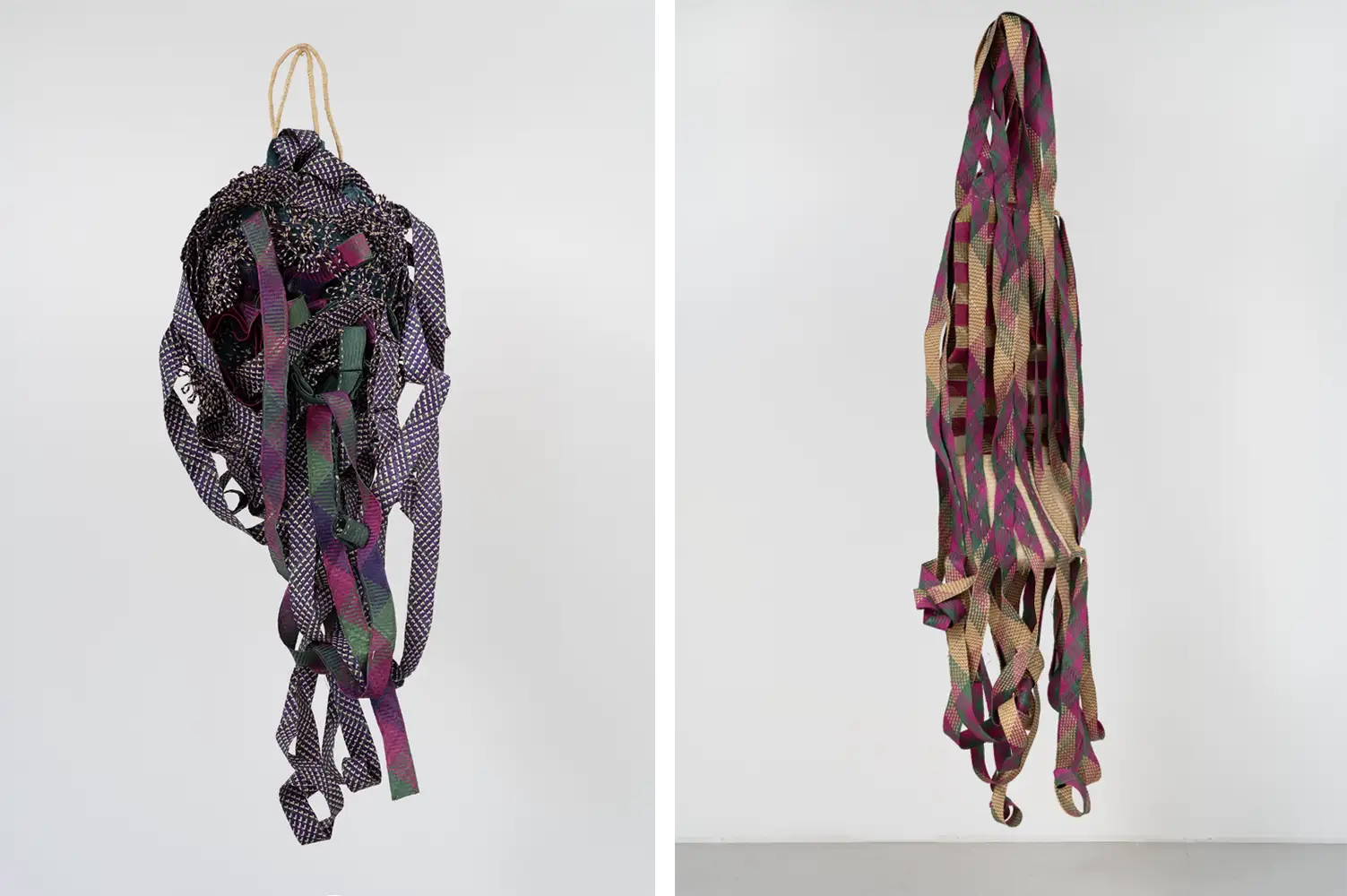
Figure 2. Tong Lengu (Eggs of Beauty) , 2024, obuso (raffia) and ensansa (palm leaves), 237 cm × 70 cm × 45 cm, dimensions variable.
Courtesy Pace Gallery. © Acaye Kerunen. Photographs by Jonathan Nesteruk.
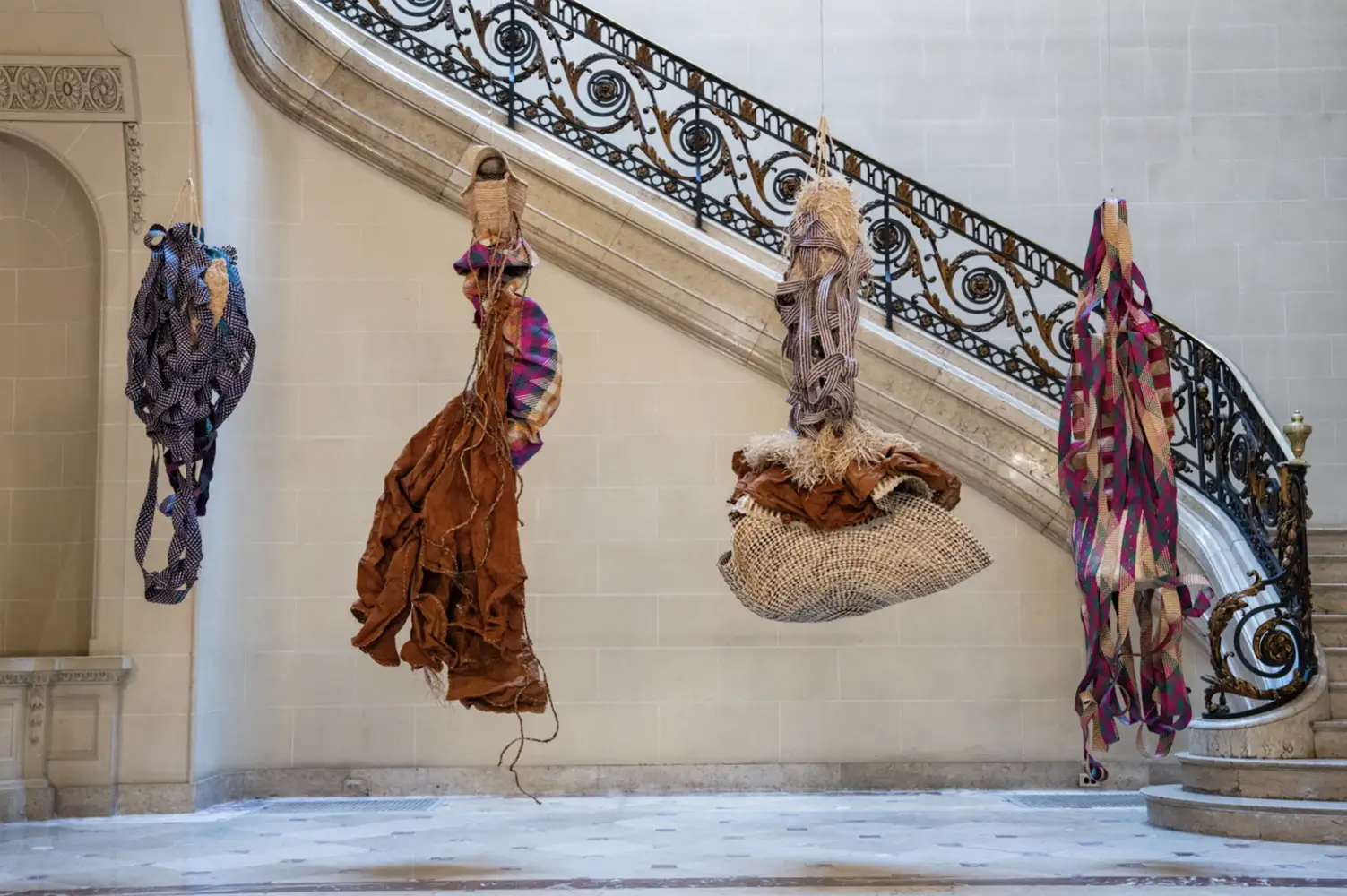
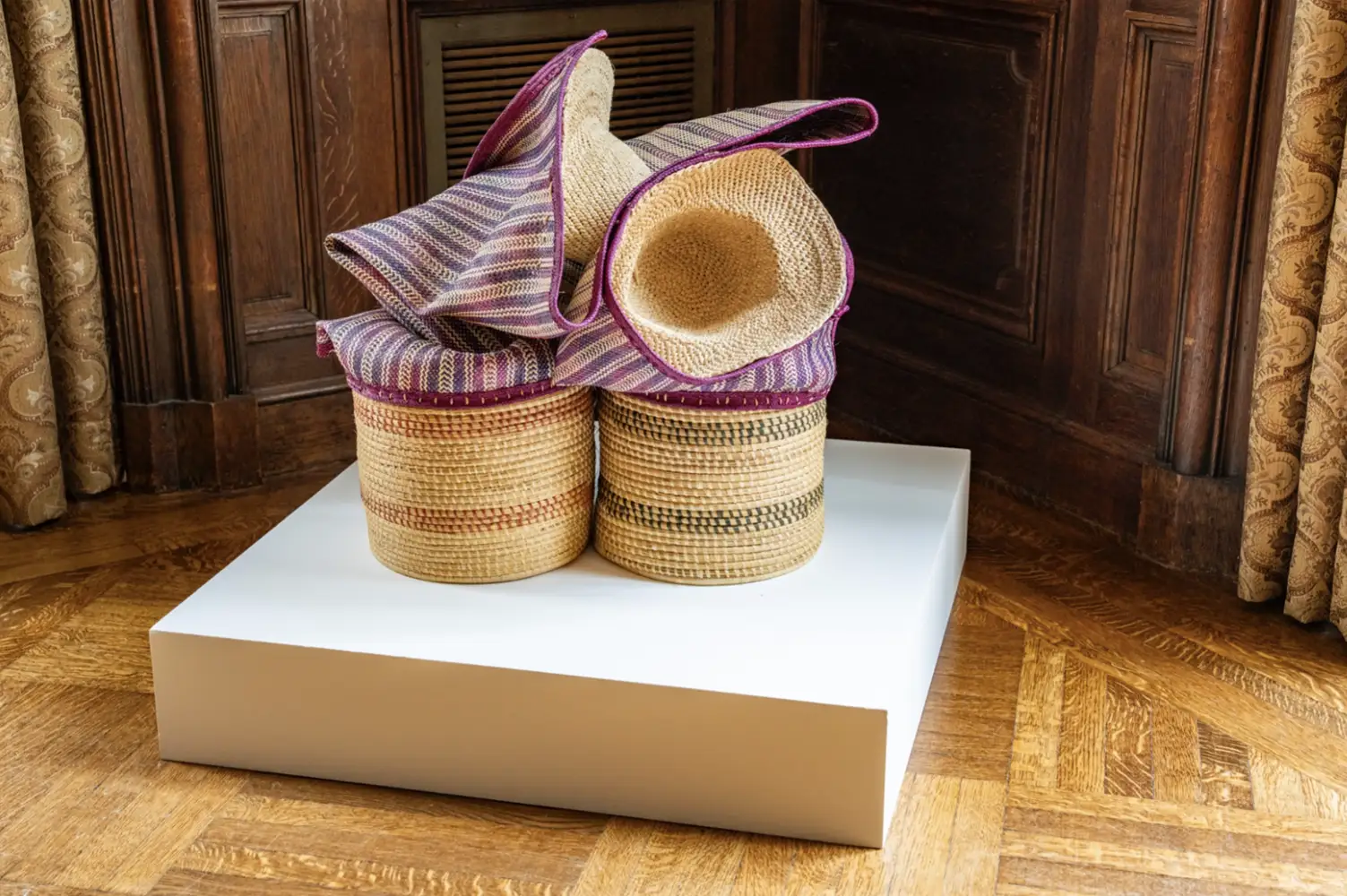
With her titles’ evocations of “eggs” and “husks” Kerunen’s works may encourage viewers to consider questions of growth and lifecycle—whether the organic vessels for embryos or outer protective shells of seeds—and the connections between such biological acts of generation and artistic projects of creation and “beauty.” Pok Lengu and Tong Lengu frame two additional works in the Great Hall, from left to right, Nyingati (Someone’s Wife) and Poluutingu (The heavens have lifted her up) , both 2023 (Fig. 3). Shown in the adjoining John Loeb room, Akwanu (I count) , 2023, echoes the formal language of the first four sculptures yet, displayed on a podium rather than in suspension, it offers a different perspective by which to engage with Kerunen’s works (Fig. 4). Altogether, the exhibition highlights Kerunen’s work with various fibers and the networks of knowledge transfer among women that preserve these artistic techniques.
Kerunen both titles her works and lists her materials first in Alur, a language spoken by communities that straddle the borders of northwestern Uganda and northeastern Democratic Republic of Congo, where Kerunen’s paternal family is from, before providing English translations. [ 2 ] Luganda is the primary language spoken in Kampala, but more than 44 languages and 68 dialects are spoken across Uganda. [ 3 ] In privileging Alur in her work, Kerunen highlights the violence of the British imposition of the English language during the colonial period (formally, from 1894 to 1962), an attempt at cultural homogenization that persists into the present. In her titles and throughout her practice, Kerunen celebrates the linguistic diversity within Uganda and rejects the colonialist endeavor to supplant indigenous languages. Relegating English to a secondary role challenges its global hegemony and highlights the complex dynamics of exhibiting in an international context.
Such questions frequently emerge in Kerunen’s career. In 2022, Kerunen was chosen alongside mixed-media figurative painter Collin Sekajugo to represent Uganda at the 59th Venice Biennale. The year marked the first iteration of an official Ugandan national pavilion, which was staged in the Palazzo Palumbo Fossati, in a two-person exhibition entitled Radiance: They Dream in Time , curated by Shaheen Merali. Remarking on the Western, colonial, nation-inscribing enterprise of the Biennale format, Merali’s catalogue essay describes how, despite new forms of inclusion, the layout of exhibition space remains “Eurospheric.” [ 4 ] As new countries enter the Biennale, their pavilions are dotted along the periphery of the consolidated cores of the Arsenale and the Giardini, which are home to the oldest pavilions representing European countries. Two years later, Kerunen returned to Venice to curate the second Ugandan pavilion, entitled Wan Acel | Tuli Bamu | Turibamwe | We Are One , incorporating the languages Luo, Oluganda, Runyakitara, and Nkore. [ 5 ] Kerunen brought together an intergenerational cohort of thirty-one artists from different regions to present, in her words, “a community of ways of achieving the same goal.” [ 6 ] The pavilion featured works by Artisan Weavers’ Collective, Sana Gateja, Taga Nuwagaba, Xenson Ssenkaba, Jose Hendo, and Odur Ronald. Artisan Weavers’ Collective contributed Library of Weaving , an encyclopedia of weaving techniques and patterns, functioning as an archive and an instruction manual for future use. [ 7 ] Kerunen’s decision to highlight multiplicity and difference instead of presenting a single artist as representative of the entire country challenges the nation-building, homogenizing tendencies of international exhibition formats. At the time of this writing, Kerunen is preparing for the 2026 Ugandan pavilion as part of the Biennale’s theme In Minor Keys , organized by the late Cameroonian-Swiss curator Koyo Kouoh (1967-2025), who championed contemporary art production across Africa throughout her career.
Even in 1246 Days Around the Sun , the contradictions of a “global” contemporary art world persist. Located on 78th Street, the Institute of Fine Arts (IFA) anchors a corridor of New York City’s Upper East Side that has long been populated by monuments to private wealth and major museums including the Metropolitan Museum of Art, the Solomon R. Guggenheim Museum, and even no longer extant institutions, such as Nelson Rockefeller’s Museum of Primitive Art, which collected and displayed indigenous objects during the 20th century, flattening them through imposed Western categorizations and display contexts. [ 8 ] Completed in 1912, the Duke House first served as a private residence for the tobacco baron James B. Duke, who built his fortune through extractive labor and environmental practices. Attentive to the complexities of the site, the exhibition’s curators, a team of IFA graduate students, worked together with the artist, New York University, and the Institute of Fine Arts library systems, including its Special Collections, to present contextual materials in three vitrines across the exhibition. The first such initiative in the Great Hall Exhibition series, the vitrines and a dedicated shelf of reading materials provide further insight into weaving as a practice, gendered experiences of labor, contemporary urban and rural dynamics in Uganda, and the exhibition history of African art in Western institutions.
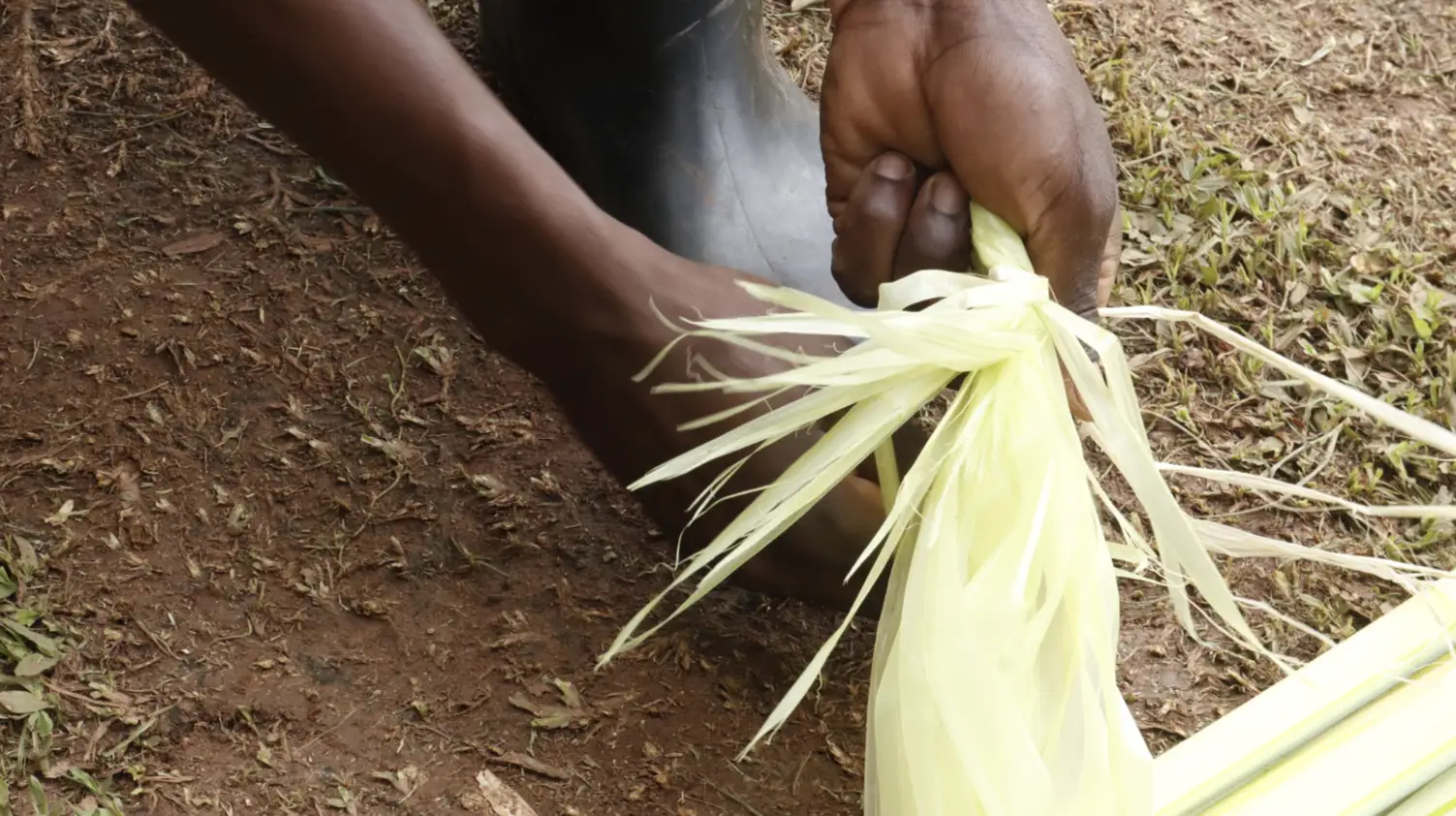
Included in the vitrines are archival materials from the artist that offer insight into her process of making and collaboration. Kerunen began working closely with groups of women weavers after frequenting an open-air market held on the grounds of Fort Lugard, which was formerly an administrative complex for the British colonial government. The market is a space where women from rural communities sell their work, often designated as “craft.” One such collaborator is Gertrude Nankabirwa, who, after several meetings and commissions by Kerunen, invited the artist to visit Nkokonjeru, a rural area east of Kampala where Nankabirwa sources the fiber. According to Kerunen, all of the obuso in her work is provided either through Nankabirwa or is traceable to a single wetland area in Central Uganda. [ 9 ] In a later research trip in 2022, Kerunen documented how obuso is sourced and processed within these communities (Fig. 5). Expanding her practice beyond the urban center of Kampala further strengthened Kerunen’s commitment to visualizing the networks of ecological knowledge preserved by the communities that inhabit the Great Lakes region.
Today, such intergenerational ecological intelligence is under increasing threat from the intrusion of extractive agricultural methods, like monoculture farming, which destroy soil as well as the diversity of native vegetation by restricting the natural yield of a field to a single crop. [ 10 ] Monoculture farming involves repeatedly planting and harvesting one crop over a large area of land, undoing the natural biodiversity of an ecosystem and robbing the soil of vital nutrients and water. In the Great Lakes region of Uganda, rice is a major monoculture crop that contributes to soil degradation, making the surrounding area more vulnerable to flooding and water-related crises. In response, the artist’s choice of materials explicitly denounces the environmental destruction of the region, instead foregrounding the vitality of these ecosystems and the individuals who tend to them. To Kerunen, ecologically destructive practices are intertwined with deep-rooted patriarchal structures that restrict women's legal and political agency. [ 11 ] After independence from British rule in 1962, Uganda maintained “customary” land ownership that excluded women, a legacy that remains deeply entrenched. [ 12 ] As a result, the turn from communal practices of sustainability to exploitative methods of farming often exacerbate asymmetrical social dynamics of gender. More specifically, families’ claims to ancestral lands are rendered illegitimate due to the sale of such properties by male members of the community. [ 13 ] Kerunen's engagement with these materials, like obuso , calls attention to the link between neocolonial legacies of extraction and gendered structures of land ownership.
Kerunen’s critique of patriarchal practices leads to a distinct formal feature of her work: she insists that her works do not make contact with the ground. This decision challenges the custom that women in Uganda kneel while weaving or presenting their finished works, a physical sign of respect and deference. The components of Nyingati (Someone’s Wife) form a floating, anthropomorphic figure (Fig. 6). Presented with a skirt-like form made of deep brown mutuba , the capacious volume of the lower register condenses into a compressed upper torso-like section. This anthropomorphic reading is only emphasized by Kerunen’s decision to top the sculptural work with a woven structure clearly constructed into the shape of a hat. Floating above the ground, this work defies the spatial norms that keep women on the ground in deference.
Similarly suspended, Poluutingu (The heavens have lifted her up) bears a title that makes explicit Kerunen’s emphasis on ascent. Poluutingu’s base is a circular form constructed from byayi upon which rests a bundle of obuso (Fig. 7). Using several braided deep purple and undyed brown strands as connective threads, the work continues upwards, physically attaching its circular foundation to a voluminous egg-like structure composed of a tighter woven pattern. Bursting out of this ovoid piece, thin tendrils of obuso cover its tip and sprawl downwards with decreasing volume. As in Nyingati , mutuba , or barkcloth—which Kerunen sources from the Democratic Republic of Congo—also appears in this work, here as the dark brown fabric draped atop the folded base. Barkcloth is associated with royalty and veneration; it was frequently worn at the royal court and during coronation the kabaka (the leader of the Buganda kingdom) is ceremonially robed in barkcloth. [ 14 ] Incorporating this noble cloth, harvested and processed exclusively by teams of men, with strips of weaving produced by women, gestures towards collaboration across a gendered division of production, while also underscoring traditions of honorifics and respect. (Fig. 8).
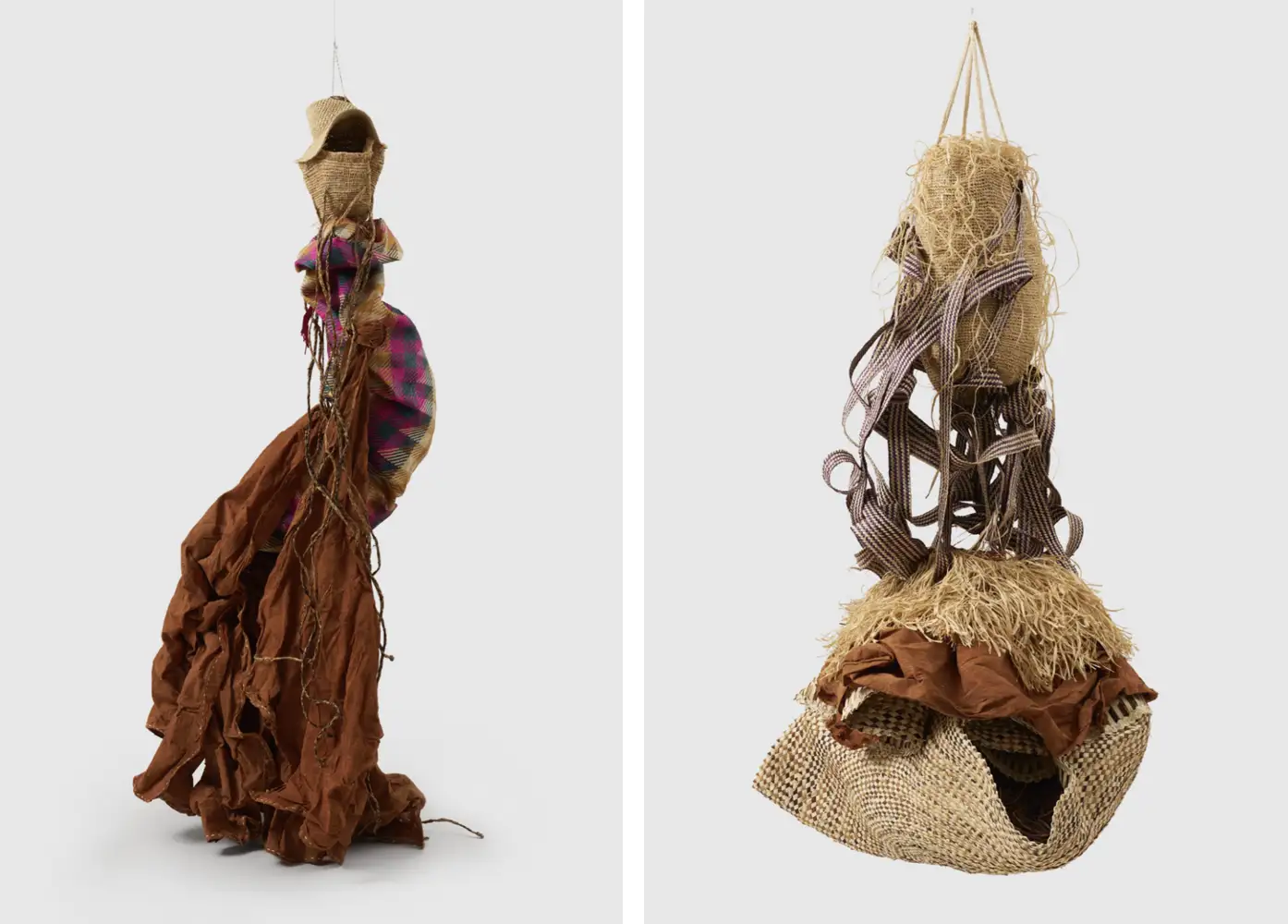
Figure 7. Poluutingu (The heavens have lifted her up) , 2023, obuso (raffia), byayi (banana fibre), mutuba (barkcloth), and ensansa (palm leaves), 204.5 cm × 134.6 cm × 106.2 cm. Courtesy Pace Gallery. © Acaye Kerunen. Photographs by Jonathan Nesteruk.
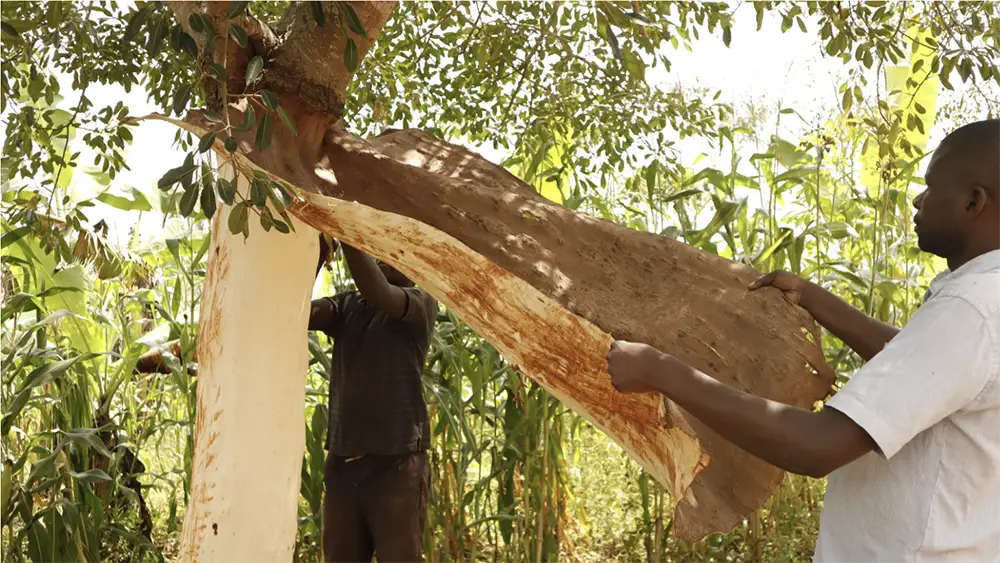
Though barkcloth is a material made by men, in Kerunen’s work its presence bestows honor on sculptural forms that audiences are encouraged to read as emphatically feminized (via their titles). This complexity may point to larger questions of gender inequity across the artist’s practice. Colonial governance, which worked in tandem with customary rule, resulted in the subjugation of women as well as the removal of their involvement from narratives of the independence struggle. [ 15 ] This erasure carries over into the arts, as men also dominated modern and contemporary art spheres, while women’s art or “craft” practices were dismissed as traditional, reinforcing what Nomusa Makhubu has called “the contested traditional/modern binary to which African art seems eternally bound.” [ 16 ] Makhubu also presents this binary as a divide between art produced in urban cosmopolitan contexts, often understood as “modern,” while rural art practices are relegated to the “traditional.” [ 17 ] Kerunen’s expansive practice resists these reductive oppositions, pointing to their fallacies and colonial roots, and offering instead the possibility of collaborative acts of making that transcend binaries of gender and region, as well as fine art and “craft.”
In privileging woven materials, Kerunen highlights the importance of the women that preserve and innovate the technical knowledge encoded in textile art. As Kerunen is a resident of urban Kampala and was introduced to these techniques by rural women who hold intergenerational knowledge, the exchanges between Kerunen and her collaborators have often been described as those between an “artist,” singular, and “artisans,” a plural network of women. In designating these women as “weavers,” “artisans,” or women “on their way to becoming artists,” as journalist Ezrha Jean Black claims in her review of Kerunen’s solo exhibition A NI EE (I am here) at BLUM gallery, the discourse has often reinscribed the binary structure Makhubu critiques. [ 18 ] Such descriptions only reify the hierarchical structures that privilege the single, creative authorship of the “artist” and implicitly justify a lack of critical attention devoted to these women. [ 19 ]
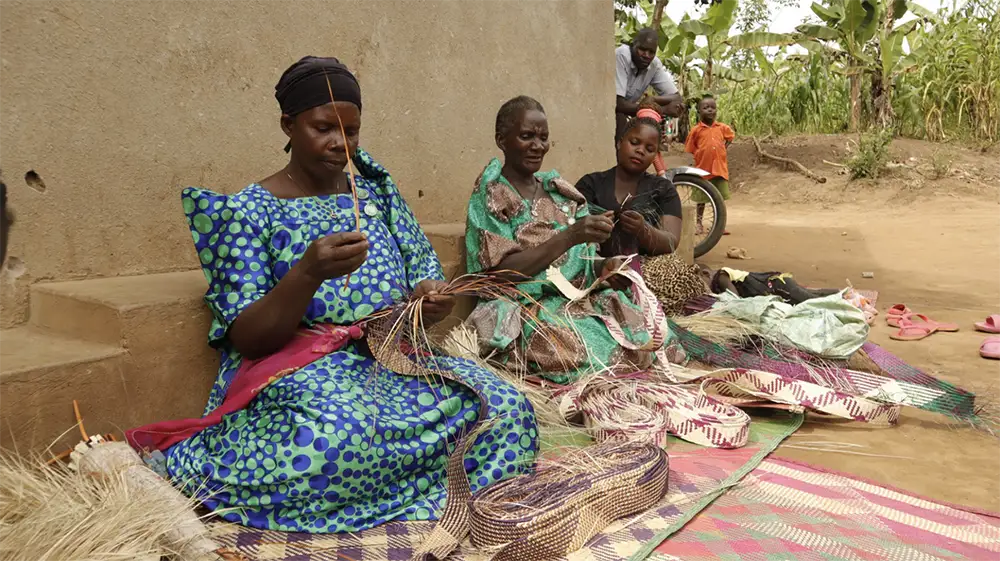
In working with an intergenerational community of women, Kerunen insists on educating her audiences about the methods by which her collaborators cultivate and transform raw fibers into dexterous technologies of embodied knowledge. [ 20 ] During one of her many research trips, Kerunen took a photo of four generations of women seated and weaving together, included in the exhibition in one of the three vitrines (Fig. 9). In the foreground, a middle-aged woman in a green and blue dotted dress holds up an orange strand of obuso as she calculates how to incorporate it into the composition on which she is working. To her right, an older woman in an ornately patterned teal and brown dress uses a tapestry needle to thread an undyed strip of fiber through her nearly finished weaving. Next to her, a young woman weaves purple and green strands into intricate squares as her daughter lies next to her. Around the corner of the building on which the three women lean as they work, a man and a young boy peer out, observing but not joining. This image shows how textile art is reliant on transferring knowledge of these skills from generation to generation. It also visualizes the calculated physical movements required to bring intricate woven patterns into being.
The importance of embodied knowledge is present in Akwanu (I Count). Though not suspended from above, it is elevated by a pedestal, and so also deliberately distanced from the floor. The work is composed of two undyed coiled cylinders; the left includes red fibers, and the right cylinder incorporates black fibers. A woven mat made of undyed, purple, and magenta fibers in an arrow pattern connects the two basket-like cylinders, billowing between them. An undyed hat is nestled in the folds of the mat halfway between the two bases, and another hat recedes into the mat, its interior facing outwards. The title points to the extensive counting and arithmetic required to weave such intricate, textured, multicolor patterns. It is also an assertion. I Count can be read as laying claim to the reverence women’s artistic practices deserve. Kerunen and the women she works with count as artists—and arguably, also mathematicians. Mathematics is encoded in the techniques of the artists from whom Kerunen sources her component parts. Kerunen foregrounds the ways in which mathematics and engineering are embedded in her work, acknowledging the labor and technical knowledge that have always been present in “craft” practices. Approaching algebra as the manipulation of symbols, weaving operates on a binary system wherein a weaver decides whether or not to pick up a warp thread. [ 21 ] Though the punch-card operated Jacquard loom is often credited as the predecessor of the computer, weavers executed the same complex operations by hand prior to the loom. [ 22 ] Thus, weaving by hand constitutes a complex set of embodied mathematical operations that manifest through variations in texture, color, and form, each pointing to the calculations embedded in their creation.
Previous writing on Kerunen’s work fails to spend time with the engineering and encoded numerical patterns required to produce these woven textiles. The title of the IFA’s Great Hall exhibition foregrounds the embodied experience of counting and time shared by Kerunen and her collaborators. 1246 Days Around the Sun refers to the cycles of time, growth, and resources that shape Kerunen’s practice. Emphasizing the role of planetary movements in the production of her work, Kerunen brings attention to climatic phases in the cultivation of her materials and their availability. The exhibition and its title also frame the experience of time as another way in which mathematics manifests as an intuitive experience rooted in the body.
Working in tandem with her collaborators, Kerunen’s artworks demand critical attention towards the persistence of colonial extraction, environmental destruction, and the undervaluation of women’s labor and textile arts. Woven, coiled, braided, and stitched together, the interlacing of natural fibers cultivated and prepared as a result of intergenerational transmissions of weaving technologies reflects the interconnected nature of Kerunen’s interdisciplinary practice—cyclical formations that are ongoing.
Works Cited
Black, Ezrha Jean. “The Here and Now of It: Acaye Kerunen Finds Purpose and Community in a Scarred Landscape.” Artillery Magazine , January 2, 2024, https://artillerymag.com/the-here-and-now-of-it/.
Errington, Shelly. “What Became Authentic Primitive Art?” Cultural Anthropology 9, no. 2 (May 1994): 201–26. https://doi.org/10.1525/can.1994.9.2.02a00030.
Fuchs, Eva. “Acaye Kerunen Weaves Her Way Back to the Venice Biennale.” Ocula , February 15, 2024. https://ocula.com/magazine/spotlights/acaye-kerunen-at-barbican/.
Harlizius-Klück, Ellen. “Weaving as Binary Art and the Algebra of Patterns.” TEXTILE 15 no. 2 (2017): 176-197. doi:10.1080/14759756.2017.1298239.
La Biennale di Venezia. “Uganda: Wan Acel | Tuli Bamu | Turibamwe | We Are One.” https://www.labiennale.org/en/art/2024/uganda.
Makhubu, Nomusa. “African Women in Art.” In Oxford Research Encyclopedia of African History . Oxford University Press, 2020.
Mamdani, Mahmood. “Preface,” In Citizen and Subject:Contemporary Africa and the Legacy of Late Colonialism . Princeton University Press, 1996.
Merali, Shaheen, ed. Radiance: They Dream in Time . Milan: Skira, 2022.
Nyamweru, Celia, and Catherine Gombe. “From Coronation Robes to Car Seat Covers: The Changing Uses of Ugandan Barkcloth.” Kenya Past and Present 36, no. 1 (2006): 53-58.
Pace Gallery. “Acaye Kerunen: Wan Acel.” https://www.pacegallery.com/journal/acaye-kerunen-in-venice/.