
Spotlight on Current Research
The Institute Goes to Princeton
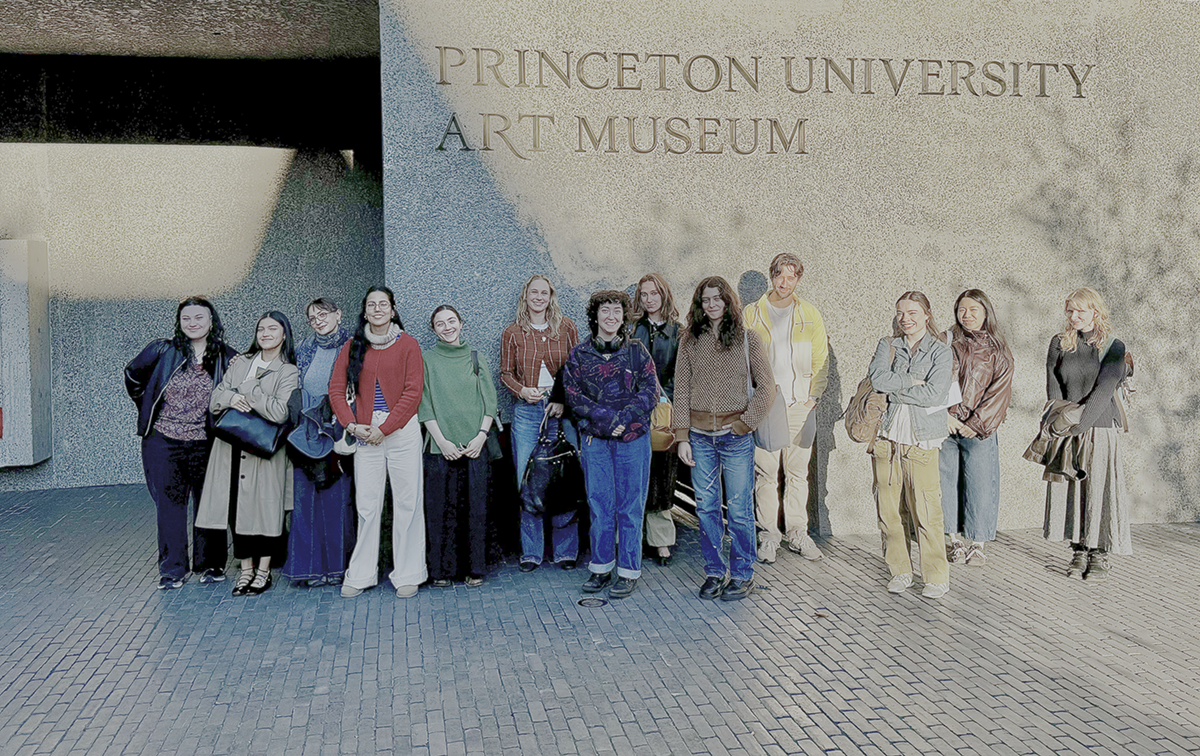
In October, students in Professor Meyer’s Ancestral (Re)presentations seminar braved the New Jersey Transit and its endearing two-car “Dinky” train to see the new installation of the Ancient Americas gallery at the Princeton University Art Museum. [Fig. 1]
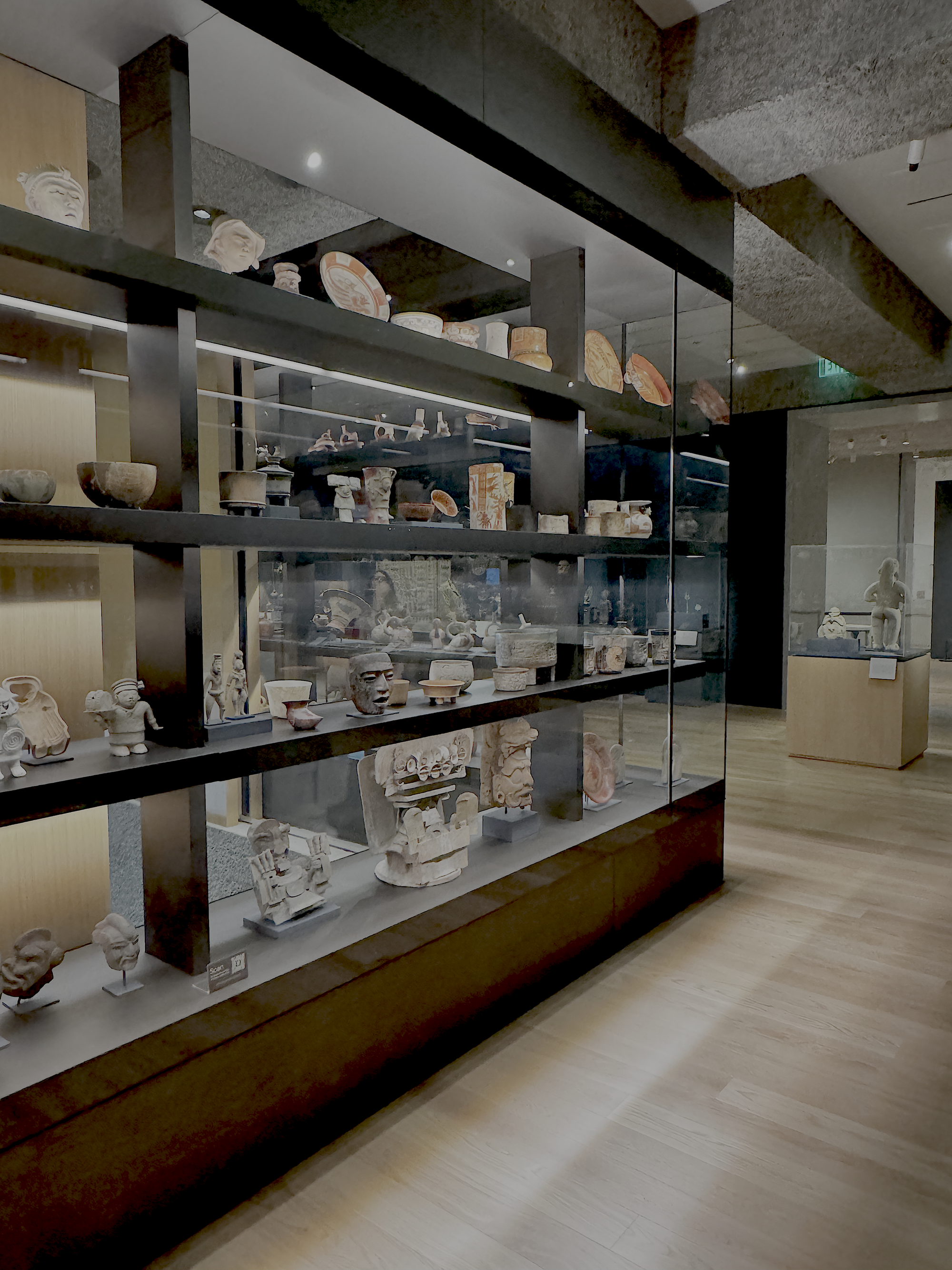
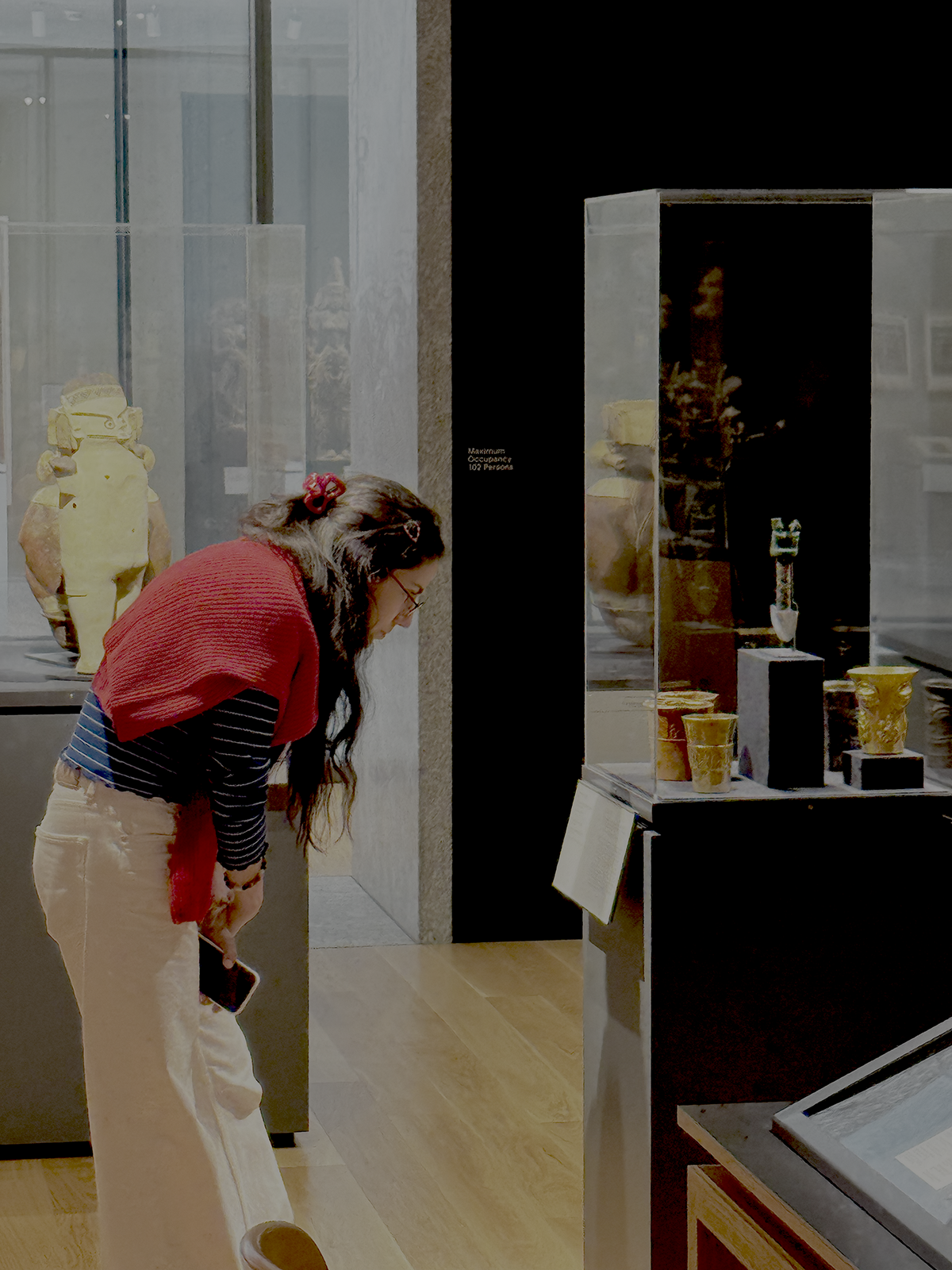
From 2021 to 2025, the Museum underwent a massive renovation. As part of the project, curators were tasked with reimagining the display of each collection. Former Peter Jay Sharp curator, Bryan R. Just, led the charge for the Ancient Americas gallery, creating an open floor plan that privileges a series of floating and anchored vitrines set in visual dialogue. The gallery space is also framed by a cabinet-like wall that allows visitors to see several works side-by-side, without labels, so that they can make visual connections between different ancestral communities. [Fig. 2] By visiting the Princeton University Art Museum, Professor Meyer wanted students to see the ways that ancestral arts of the Americas are being displayed and reconfigured in the Northeast, as well as how university museums are reframing Indigenous works alongside larger institutions like the Metropolitan Museum of Art.
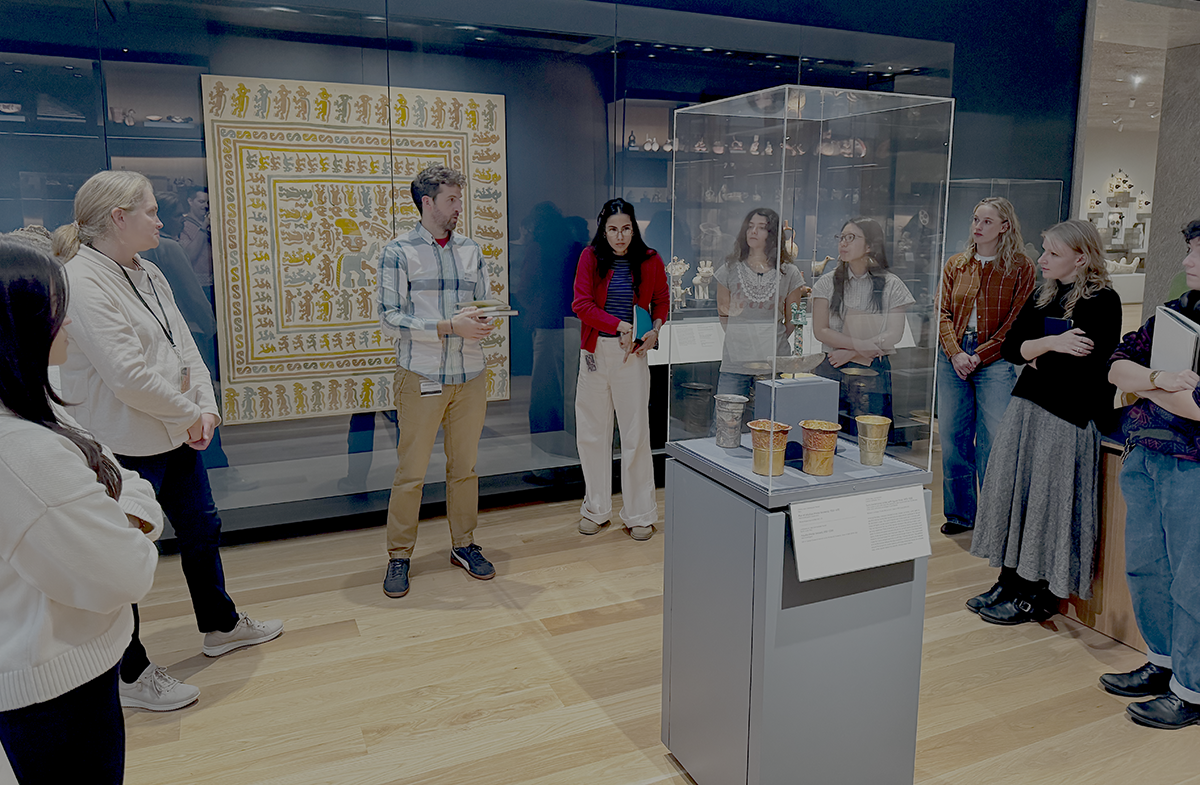
At the Museum, students received a guided tour of the gallery from Dr. Veronica White, Curator of Teaching and Learning, and Dr. William Schwaller, Curriculum Support Specialist [Fig 3]. They explained that the Museum’s new displays focus on connections between collections, often centered around a theme. They also shared insights into how the Ancient Americas collection was largely formed through the efforts of its first curator Gillett Griffin and how it continues to grow through special alumni gifts. Schwaller, who is a specialist of modern and contemporary Latin American art, then walked students through parts of the collection, highlighting its hemispheric expanse, as well as a few of its standout pieces.
After the tour, students were given time to explore the works more closely. As part of the visit, Meyer tasked students with selecting a work from the gallery, which they will center and analyze in an essay that describes the life of the work, told from its perspective. Drawing on Indigenous studies frameworks, Meyer’s seminar pushes students to think about ancestral objects as living subjects. This assignment in particular challenges them to embody the work they choose, from its time as a natural material to its current display in the Museum’s gallery. It also requires them to do some academic reading about the work, as well as think critically about its provenance. For any information that the students cannot locate, they have been asked to fill in the gaps creatively, but with a critical eye informed by their close reading of secondary sources, labels, and catalogue entries.
[Fig. 4] One student, Vanessa Ocaña-Mayor, who is a conservation and art history dual master’s student at the Institute, is challenging herself to narrate the life of one of the gallery’s central works: a Chimú wall textile. Vanessa had this to say about the assignment:
Having a chance to see the Princeton University Art Museum and their redesigned Ancient Americas gallery was an incredible opportunity. As a Peruvian native and a textile artist, an exquisite Chimú painted cloth immediately caught my attention. Through my research, I learned it is one of ten known fragments originally composed from two long woven cloths that were stitched together before being painted. This assignment has challenged me to inhabit the piece, and I look forward to the next time I can come to the gallery and pay it—and the rest of the collection—a visit.
Other students are reflecting on the making, use, and display of houses that functioned as censers from the site of Teotihuacan, whistling figures with removable masks from what is now Veracruz, and knotted arrays of strings called quipu from the central Andes. The students’ diverse selection of works for the assignment reflects the innovative design of Professor Meyer’s seminar. It isolates the artistic portrayals made by specific ancestral communities from week to week, ranging from the anthropomorphic and creaturely to the abstract and geometric. The goal of the course is to have students think both broadly and contextually about these varied histories of Indigenous arts across the Americas. And, in so doing, it also forces them to grapple with how to better tell the narratives and perspectives of these lively works.
Back to Spotlight on Research & Accomplishments